Home/Business process automation
Business process automation
Manual back-office work grows with revenue, and hiring your way out stops working. We find which processes repeat and follow rules, then build the systems that carry them out inside the tools you already use.
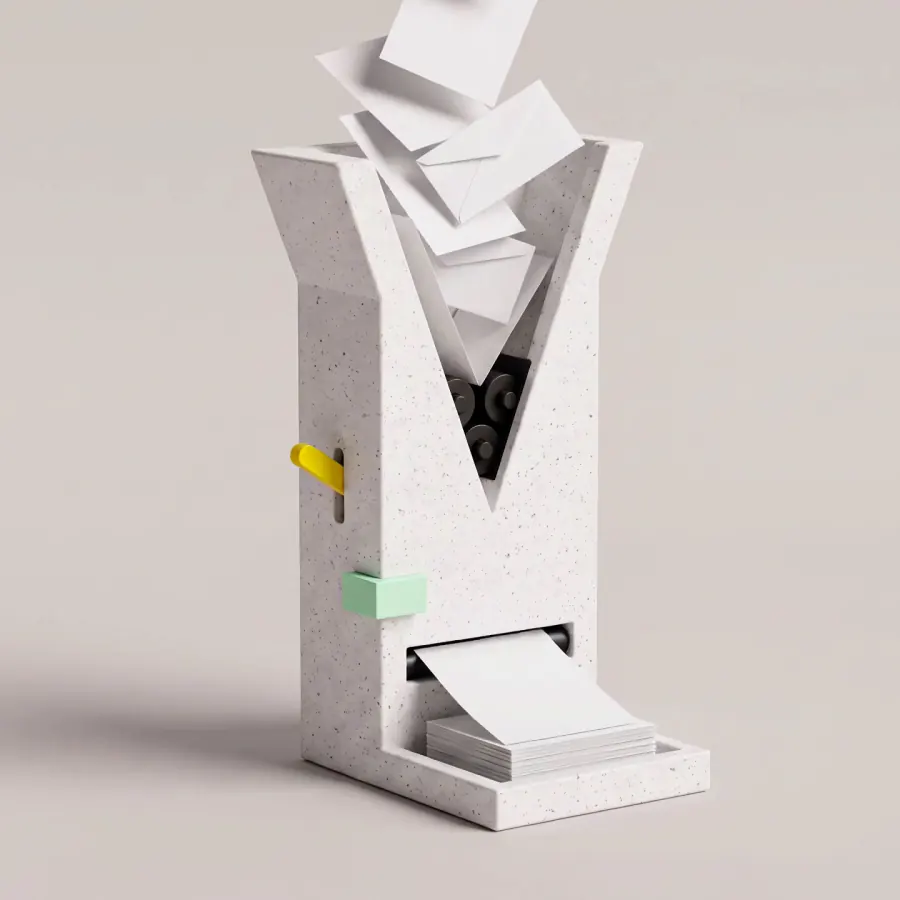
If it repeats, it can be automated.
The rule is simple: if the work repeats, follows clear rules, and a person does it by moving data between systems, it can be automated. These are where we usually start.
Data flow matters more than data readiness.
We build the pipes that move and clean your data as part of the work. You do not need a perfect data warehouse to start.
How one automated process works.
Take a price enquiry turning into a priced quote. Six steps, no magic, all inside your stack.
A few seconds, not 25 minutes.
The whole chain, from received email to prepared quote, runs in a few seconds. The same work by hand took about 25 minutes. Watch it run in the demo →
We don't flip a switch and hope.
Rollout happens in three stages, and at every one you can see what the system would have done.
Before any of that: every build is spec-driven and regression-tested against your real examples before launch, and every action is written to an audit trail. How we decide which actions need a person's approval →
Modelled before we build.
We model the return in two scenarios from your real volumes before building. If the maths does not work, we say so.
Usage costs billed to your own accounts Optional care plan from €1,000/mo You own the code
Common questions.
Which process should we start with?
The one that repeats most often and follows clear rules. Usually that is document entry or quote preparation, because there the current cost is easiest to measure: time × volume × loaded hourly cost. We measure it together during discovery.
Will we have to change our current systems?
No. The automation runs in your existing CRM, inbox, ERP and documents, where the work already happens. There is nothing to migrate and no new platform to adapt to.
Our data is messy. Is that a blocker?
It is not. Data flow matters more than data readiness. We build the pipes that move and clean your data as part of the work. You do not need a perfect data warehouse to start.
What happens when the system gets something wrong?
That is what the three rollout stages are for. In shadow mode a mistake costs nothing because nothing is sent. With human approval a person catches it before it goes out. Under supervised autonomy unclear cases are routed to a person automatically, and every action is on an audit trail.
Can we automate several processes at once?
You can, but we usually advise against it. We work in modules: the first process goes live in 3–6 weeks and starts returning value, and its foundations — integrations, rules, tests — speed up every one after it.
Who maintains the system after launch?
Day-to-day running can sit with your team; we design for that. If you would rather we monitor, tune and extend it, there is an optional care plan from €1,000/mo.
Automation by sector.
The method is the same; the documents and systems differ. These pages go into the detail for each.

Manufacturing
The ones where a person moves data between an email, the ERP and a document. In manufacturing that is almost always quoting and supplier invoice entry.
Logistics
The ones that repeat with every shipment. Document capture and status requests give the largest return, because their volume grows directly with turnover.
B2B trade & export
The ones that repeat with every enquiry. Quoting and taking orders from email are the usual first step, because there delay turns directly into lost deals.
Professional services
The ones that repeat across clients and require no judgement. Client intake and standard document drafting are the usual first step, because that time is not billable.Tell us about the workflow eating your team.
A free 30-minute call. We will tell you straight whether AI can fix it, what it is worth and what it would take.
- A concrete read on your highest-ROI opportunity
- A ballpark of the investment and the return
- A clear next step, only if it makes sense
Prefer email? [email protected]