Home/Automation/B2B & export
B2B sales and export automation
Every new market brings revenue and, with it, another layer of administration: another language, another price list, more email. Automation lets you open markets without growing the back-office team.
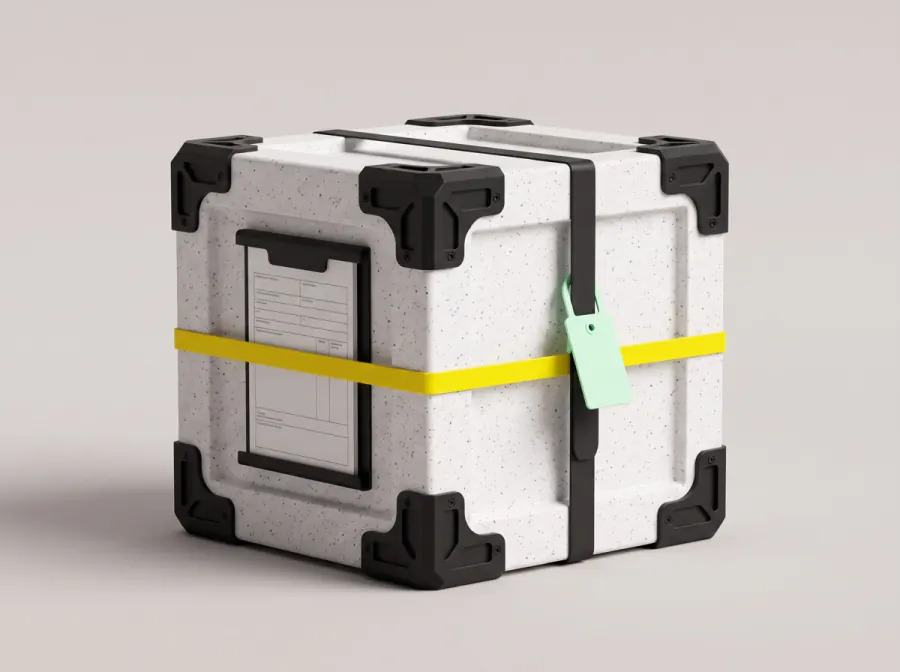
More markets. Same back-office.
Orders, quotes and multilingual correspondence handled automatically — so opening the next market does not mean opening the next admin desk.
Vertara · spec sheet
- Built for
- Exporters and B2B trading companies
- Common processes
- Orders from email, quoting, multilingual correspondence, CRM hygiene
- Where it runs
- Your CRM, ERP and inbox
- Time to live
- 3–6 weeks from a signed scope
- Price ceiling
- Within 60% of the conservative scenario's first-year return
- Ownership
- Code in your repository, models on your accounts
What gets automated first.
The ones that repeat with every enquiry. Quoting and taking orders from email are the usual first step, because there delay turns directly into lost deals.
| Process | How it works today | How it works with the system |
|---|---|---|
| Price enquiry | A quote is assembled by hand from an email thread | The email becomes a priced quote with your volume-discount rules applied |
| Taking an order | Details retyped from the email into the ERP | Extracted and entered; mismatches routed to a person |
| Multilingual correspondence | Translations and replies written by hand | Replies drafted in the customer's language; a human approves |
| CRM hygiene | Updated whenever somebody remembers | Records updated from the correspondence automatically |
| Price lists and terms | Different markets, different files | Rules encoded and versioned in one place |
3–6 weeks. Priced to the return.
Your first production system goes live 3–6 weeks after a signed scope. The price is tied to the return, not to hours.
Usage costs billed to your own accounts Optional care plan from €1,000/mo You own the code
Common questions.
How many languages can the system handle?
As many as you need. The practical limit is not the number of languages but whether we have real correspondence of yours in each one to test against. We plan that during analysis.
Will the system send quotes to customers by itself?
Only if you want it to. The default is that it prepares, and a person approves and sends. You set the autonomy boundaries, and they can be changed at any time.
We run different price lists per market. Is that manageable?
Yes. Pricing rules are encoded, versioned and regression-tested against real examples. Change the terms in one place and they apply across every market.
Is this worth it at a few dozen enquiries a month?
It depends how long one takes. If preparing a quote costs 25 minutes, a few dozen a month is already a meaningful number. We measure it during analysis and tell you plainly if it does not pay back.
Other sectors.
The same method applies to other sectors where data still moves by hand.

Manufacturing
The ones where a person moves data between an email, the ERP and a document. In manufacturing that is almost always quoting and supplier invoice entry.
Logistics
The ones that repeat with every shipment. Document capture and status requests give the largest return, because their volume grows directly with turnover.
Professional services
The ones that repeat across clients and require no judgement. Client intake and standard document drafting are the usual first step, because that time is not billable.Tell us about your process.
A free 30-minute call. We will tell you straight whether the process is worth automating, roughly what it would cost and how quickly it would pay back.
- A concrete read on your highest-ROI opportunity
- A ballpark of the investment and the return
- A clear next step, only if it makes sense
Prefer email? [email protected]