Home/Automation/Logistics
Logistics process automation
Every shipment leaves a stack of paperwork behind it, and every document costs a few minutes of manual work. Multiply that by shipments per month and you have a full-time role, or two. That is the work we automate.
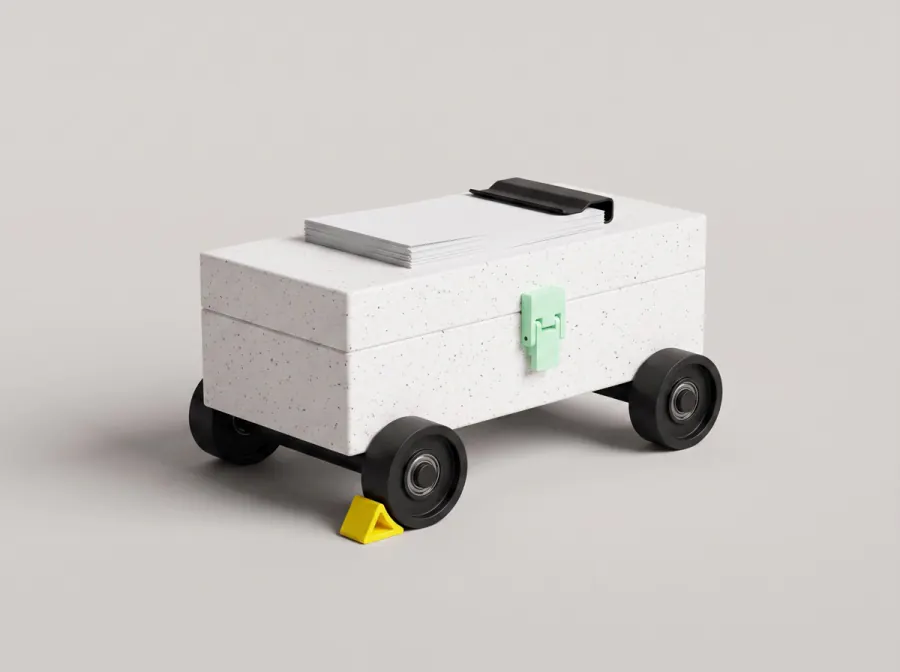
Paperwork automated. People on exceptions.
CMR notes, customs documents and invoices processed automatically, so your dispatchers and forwarders handle only the exceptions.
Vertara · spec sheet
- Built for
- Transport, freight forwarding and warehousing companies
- Common processes
- CMR notes and waybills, customs documents, invoices, status requests
- Where it runs
- Your TMS, accounting system and inbox
- Time to live
- 3–6 weeks from a signed scope
- Price ceiling
- Within 60% of the conservative scenario's first-year return
- Ownership
- Code in your repository, models on your accounts
What gets automated first.
The ones that repeat with every shipment. Document capture and status requests give the largest return, because their volume grows directly with turnover.
| Process | How it works today | How it works with the system |
|---|---|---|
| CMR notes and waybills | Scanned and keyed in by hand after each trip | Extracted, checked against the order, attached to the shipment record |
| Customs documents | Data gathered from several sources and retyped | Assembled automatically; discrepancies flagged for a person |
| Carrier and supplier invoices | Matched against the order by hand, queued for weeks | Reconciled automatically; differences routed for review |
| Status requests | A dispatcher answers the same questions by hand | Answered from TMS data; complex cases handed to a person |
| Delays and exceptions | Noticed when the customer calls | Detected from the data and reported to you first |
3–6 weeks. Priced to the return.
Your first production system goes live 3–6 weeks after a signed scope. The price is tied to the return, not to hours.
Usage costs billed to your own accounts Optional care plan from €1,000/mo You own the code
Common questions.
Will it talk to our TMS?
Yes. We work with the system you already run. If it exposes an interface we connect through it; if not, we build the integration as part of the work and it remains your property.
Our CMR notes are on paper and often poor quality. Does this still work?
That is precisely why we test against your own scans before launch. Unclear documents are never guessed at — they are routed to a person instead of being posted incorrectly.
How many documents a month make this worth doing?
The threshold is not a document count but the arithmetic: time × volume × loaded hourly cost. We work it out with you during analysis, and if the price does not fit within 60% of the conservative return we say so and do not sell the build.
Will customer and shipment data stay in our infrastructure?
We deploy inside your environment, and the automation layer can be self-hosted on your own servers so data never leaves your infrastructure. You review the architecture before any build starts.
Other sectors.
The same method applies to other sectors where data still moves by hand.

Manufacturing
The ones where a person moves data between an email, the ERP and a document. In manufacturing that is almost always quoting and supplier invoice entry.
B2B trade & export
The ones that repeat with every enquiry. Quoting and taking orders from email are the usual first step, because there delay turns directly into lost deals.
Professional services
The ones that repeat across clients and require no judgement. Client intake and standard document drafting are the usual first step, because that time is not billable.Tell us about your process.
A free 30-minute call. We will tell you straight whether the process is worth automating, roughly what it would cost and how quickly it would pay back.
- A concrete read on your highest-ROI opportunity
- A ballpark of the investment and the return
- A clear next step, only if it makes sense
Prefer email? [email protected]